

World's largest cross-country race 2026
FRI, September 25, 2026
·
Lidingö
, Sweden
Distances
1.7 km
2 km
4 km
5 km
6 km
10 km
15 km
30 km
About this race
Lidingöloppet is a 30-kilometre cross-country run on Lidingö, an island suburb of Stockholm, typically held in early autumn. It holds the distinction of being the world’s longest cross-country running race and the largest cross-country event, drawing approximately 25,000 participants annually. The event spans two and a half days, offering races for participants from age seven upwards, though the main 30 km race is selected by nearly half the field.
The course winds through trails and minor roads across Lidingö's woods and parks, concluding at Grönsta meadow. Its most challenging part is Abborrbacken, or “Perch Hill,” a climb situated about 5 km from the finish that has often determined race outcomes after aggressive early pacing. The race originated from Swedish athletics journalist Sven Lindhagen's advocacy for a Swedish running event comparable to the Vasaloppet ski race; Sven Gärderud subsequently outlined the route through his hometown within days. Initial participation was limited to a few hundred runners, but the event evolved into a large gathering of club athletes, recreational runners, children, and international victors, including several Kenyan champions and a Swedish winner who made up ground over the final 10 km.
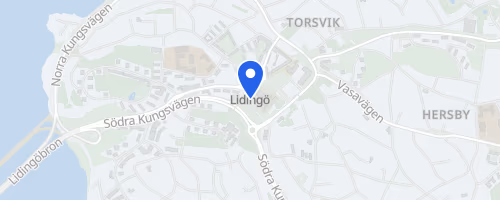 © OpenStreetMap
TCS Lidingöloppet
Lidingö